The “3” and the “0”
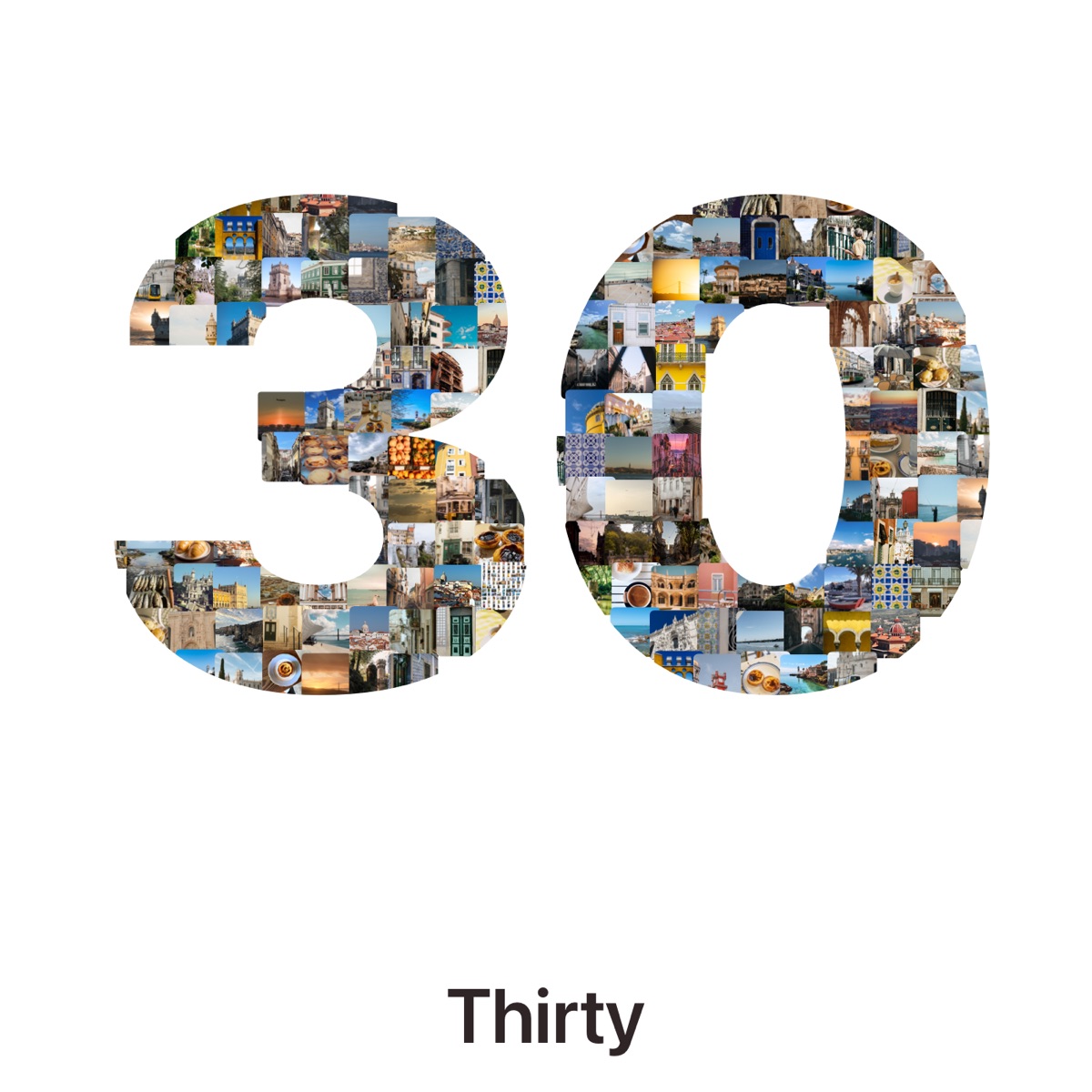
- The “3” is two open curves joined in the middle. It holds a bit less than the “0” and has more edges, so smaller tiles help.
- The “0” is a ring. Its inside edge is the most visible line in the collage; keep brighter photos there so the hole reads cleanly.
Two ways to fill it
Thirty years in order. One photo per year in the “3” (baby to college), then the last decade, friends, partner, travel and work, in the “0”. Parents and old friends usually have the early photos; collect them in a shared album two weeks ahead.
One decade, or one trip. A “30” doesn’t have to be a life story. The last ten years of friends, or one big birthday trip, make a lighter collage. The example above is a single Lisbon trip.
At the party and after
A big print on foam board by the entrance works as decoration and a conversation starter, especially if guests can find themselves in it. Afterwards, an 11×14 copy in a frame is the keepsake.
print sizes for a “30”
| Size | Good for |
|---|---|
| 8×10 | a desk frame |
| 11×14 | a framed gift for the wall |
| 16×20 to 24×36 | the party poster or a photo backdrop, from a print shop |
Aim for 120 to 250 photos. For a sharp print, the file needs about 300 pixels per inch at the size you print; see how to print from an iPhone. To work out a photo count for your own number and size, try the number collage photo counter.